
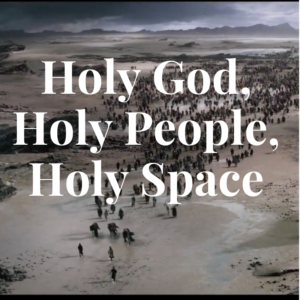
This summer we have been on a slow trek moving through the Book of Exodus. We have heard the stories of the ancient Hebrews who were slaves in Egypt, of Yahweh calling a reluctant but very good leader in Moses who led the people out of slavery, across the Red Sea, through the desert to Mt. Sinai where they are now encamped at its base while Moses has gone to the top and is receiving God’s word. We have seen that leadership has been spread out from just Moses to an ordination and commissioning of others and that as they moved from fleeing the Egyptians to being a community, leadership style has needed to change. At first Moses’ leadership style was that of a military leader saving his people from slavery and death. As the years went on, and the community was free and stable even though they had not yet reached the Promised Land, rules for living in community and as God’s people needed to be formed. God reinforced the covenant God has with the people and rules of civility and of being the people of God were formed.
And more change occurs as they formalize this relationship they have with God. This morning we will go over seven chapters which to me create a drastic change between the people of Israel and their relationship with God. It is, a movement from having a relationship with God, to formalizing a religion around it. It is the making of physical and ritualistic items that will define their worship and devotions. Please turn to a pew Bible which you will find in the back of your chair and follow along with me as I go over very briefly chapters 25-31 of the Book of Exodus found in pages 70 through 78. I’m afraid if I read these chapters I would put you to sleep, so we will just go over them quickly and get the gist of the message.
In Chapter 24 God, through Moses, ordained and installed a group of 70 elders through a pretty gory ceremony involving the blood from sacrificed oxen being put on them. These were the priests that would lead the people in their relationship and ministry to which God calls them. And in their vows made in the ceremony, they pledged that they would follow all the words which Moses told them to do. Then, starting in the next chapter, God tells Moses about the ministry to which these leaders of the faith were called. The first thing God says is that the people of God must give an offering to God to build the tabernacle and other religious items that must be built. A list is made of all the costly items that must be collected. These are donated in order to build a tabernacle, to build the Ark of the Covenant (which will hold God’s laws), to build a table and beautiful plates and dishes for incense and drink offerings, to build a lamp to illumine the Tabernacle, and to build an altar for burnt offerings. The descriptions and details as to what these are to be are incredible. The exact dimensions, materials, and adornment is described. (There is a lot of gold leaf involved) I have copied a few drawings people have from these descriptions to give those of you who are visual learners an idea of the beauty and magnificence of these objects. But that is not all God tells Moses to make. The clothing for the priests is described. And, I’m telling you with the fine textiles and jewels adorning the vestments, must have been as wonderful as the clothing worn by the popes that you see in Vatican museums in Italy.
The chapters made me realize how quickly and easily we move from belief, from having faith and acquiring a relationship with our Creator, to formalized religion, liturgy, and rites. The people of Israel have created a priestly class whose job it is to create the formalized response to God which up until now had been informal but observed. And perhaps that is a part of the role of formalized religion. To make ritual what was an innate response. No wonder so many people scorn formalized religions and say that phrase I cringe at whenever I hear it: I am spiritual but not religious….. Do we gain or lose something as we formalize our faith?
Responding to faith in our Deity as a community and ritual acts has been done since the dawn of humankind. What differentiates the Hebrew rites from others done by the people of their time, is that they did the rituals, not for God, not to control God in any way or make God look favorably upon them. We are told over and over again throughout the scriptures that God is not to be controlled. And God’s faithfulness does not falter. God made a covenant with God’s people and promised not to break it. Worship is a response to that covenant. God does not need the rites and sacrifices… the people of God do.
And we do understand that. We come to church because we are a people who believe in God’s love. We come here to be a part of a community of love in a world that needs it. We come here to pray, not because God needs to hear our prayers, but because in prayer we are transformed and become better people. We come here because we are grateful to God for what God has given us and that in spite of our imperfections, we are continually forgiven and loved. And we come to find ways to show, share, and be that love to others. And we come to share our story, to sing sacred songs that are a part of our culture, and to teach them to our children.
The future church will still be one that is defined by a missional nature. Somehow we got off course and thought it was something for programs and needs we had. The church has always been called to worship God, as a response to what God has done for us and it calls us to emulate God to the world. In other words… to do God’s work on earth. This is the work of a God of justice and love.
And I’m guessing that these ancient Israelites were not so different than we are. They needed their relics just as we love our cross and this sanctuary. But, our faith is not dependent on this space and we built it so that we could corporately worship and celebrate life together as a community, not out of God’s needs. We come here to be fed emotionally, intellectually, and spiritually so that we cannot just look out but go out and take God’s love and acceptance to others. The bottom line is….we need the church just as those ancient Israelites needed the tabernacle. Thank God for giving us the church. Amen.